
Our 23Q1 Containership report is out now. Below, Costas Bardjis reflects on some of the key points from the report.
Following two years of sky-high profits and unprecedented returns, the containership industry wakes up to the reality of "normalization". Liner freight rates and charter rates have come back to earth, down from the astronomical highs reached in 2021 and in early 2022. Liner operating margins in 2023 are likely to be only a small fraction of those enjoyed in 2021 and in 2022. The outlook for 2024 looks increasingly challenging due to a ballooning orderbook, even if one were to discount macroeconomic and financial risks and rising geopolitical tensions.
And yet, this time around, the industry is well-prepared to face a market downturn. Liner operators have expanded their holdings in terminals, warehouses and logistics and invested in environmental partnerships and new technologies. They have improved their balance sheets and their cash coffers are full. Meanwhile, leading charter-vessel owners have secured multi-year contracts with reputable liner companies at top price and they are also sitting on piles of cash.
2M Alliance Breakup Analysis
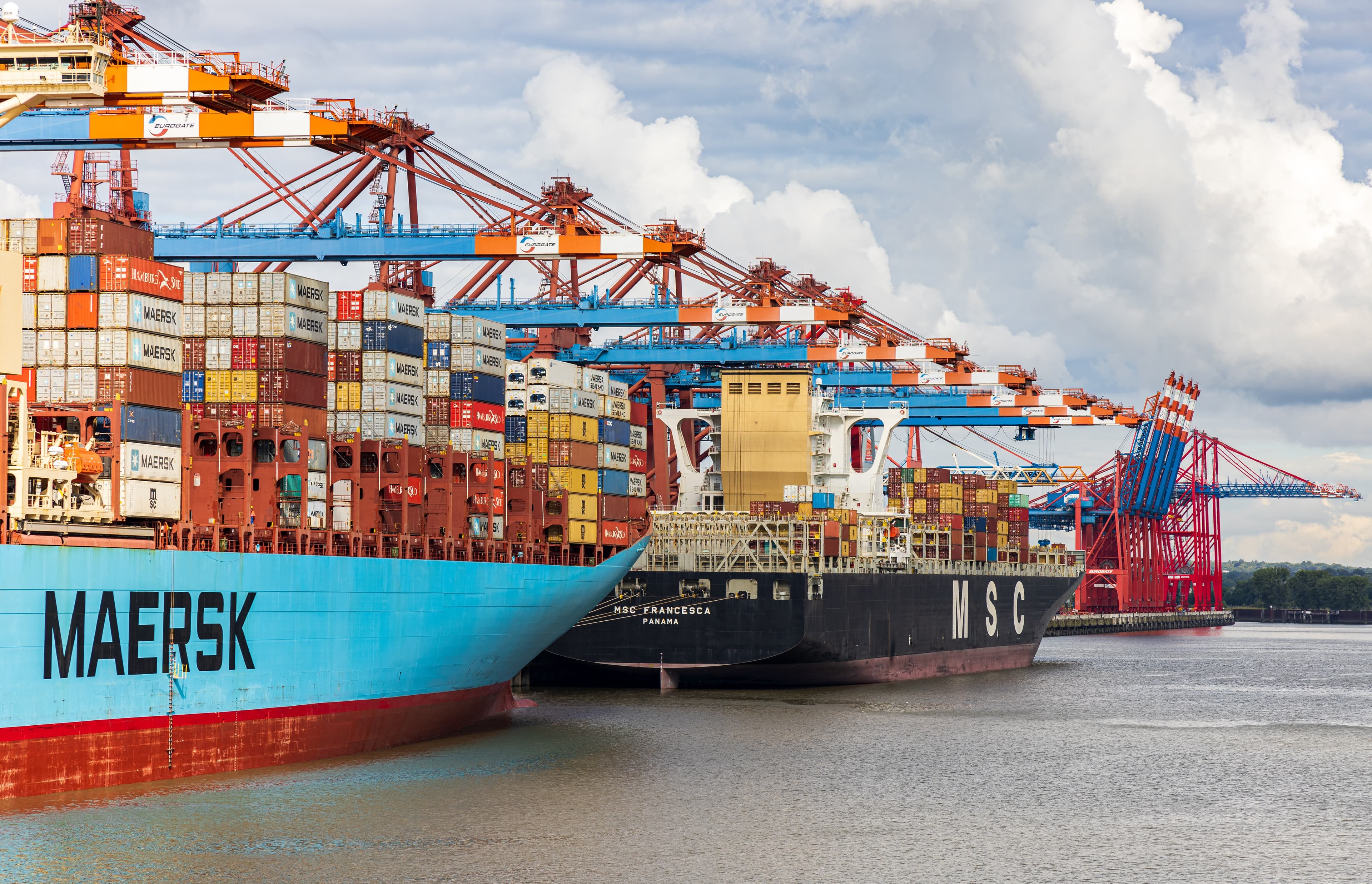
Looking ahead, pundits point to the breakup of the 2M alliance between the industry's two largest ocean carriers, MSC and Maersk, as a potential stumbling block both for liner operators and for charter-vessel owners (the breakup becomes effective in 2025). Some have rushed to proclaim this as crushing event for Maersk, questioning whether the industry giant can operate profitably on a stand-alone basis. Others speculate that the breakup heralds a structural change in the industry leading to the demise of the alliance system. And yet others claim that this event can only lead to further industry consolidation to the detriment of charter-vessel demand and charter rates.
All these theories seemingly ignore a simple fact that is ingrained in the containership industry during the last two decades: This is a fully commoditized industry where market fundamentals drive and will continue to drive rates and profitability. Maersk itself has highlighted the fact that the liner market is a fully commoditized business in its quarterly financial statements for several years now.
Market Fundamentals Trump All
We should also be cautious of opinions expressing drastic shifts in market patterns: During the market boom of 2021-2022H1, pundits claimed that the pricing power of liner operators over shippers should keep freight rates elevated for extended period of time, arguing that ocean carriers can exercise their pricing will by controlling capacity. This argument was quickly dispelled when weakening market fundamentals drove rapidly liner rates back to prepandemic levels by the end of 2022. Liner company attempts to stem the freight rate correction by suspending services in the east-west trades and by blanking sailings failed to stop the rate hemorrhaging.
Similarly, arguments stating that industry concentration and global alliances should help limit newbuilding ordering and fleet expansion (via coordinated action) were also proven wrong during the last two years. Unprecedented profits pushed all major carriers to the newbuilding table, as each tried to expand its own market share. Old habits die hard, and the competitive nature of the business trounces concepts of cooperation in the newbuilding arena. Today, the containership orderbook to fleet ratio stands at 29%, the highest level in 12 years, and presents a clear and present danger for the wellbeing of the industry in the coming years.
Maersk's Position
The splitting of the 2M alliance does not predicate a reshuffling of the other two global alliances (if Maersk were to join another alliance or instigate a new alliance network). According to Alphaliner figures, only 39% of Maersk's capacity operates within the 2M alliance today and, furthermore, Maersk's vessels account for 60% of the total tonnage deployed by 2M. So, Maersk has the size and flexibility (by arranging cross-alliance VSAs with other liner operators) to maintain its market share. The same holds true for all 5 leading operators (MSC, Maersk, CMA CGM, COSCO and Hapag Lloyd).
Environmental Credentials Matter
Indeed, newbuilding contracts signed by top-tier carriers during the last two years highlight that the race towards a carbon-neutral transportation industry is already proceeding at full speed in the liner world. Whereas shipowners in the tanker and dry bulk shipping markets have adopted a "wait-and-see" attitude when it comes to the type of vessel propulsion and future fuel of choice, leading liner operators have invested heavily, and almost exclusively, on newbuildings with dual fuel propulsion during the last two years (LNG and/or methanol).
Rather than worrying about scenarios relating to future alliances and/or changes in industry consolidation, liner companies and charter vessel owners should work towards a more wholistic approach to deal with environmental constraints, be it via newbuildings or via vessel retrofits.
In summary, while the containership industry will remain a competitive market whereas market conditions drive rates, superior environmental credentials are likely to lead to higher fleet utilization for carriers operating green ships, and by extension to charter-vessel owners whose ships are compliant to environmental dictates.